Aurelian
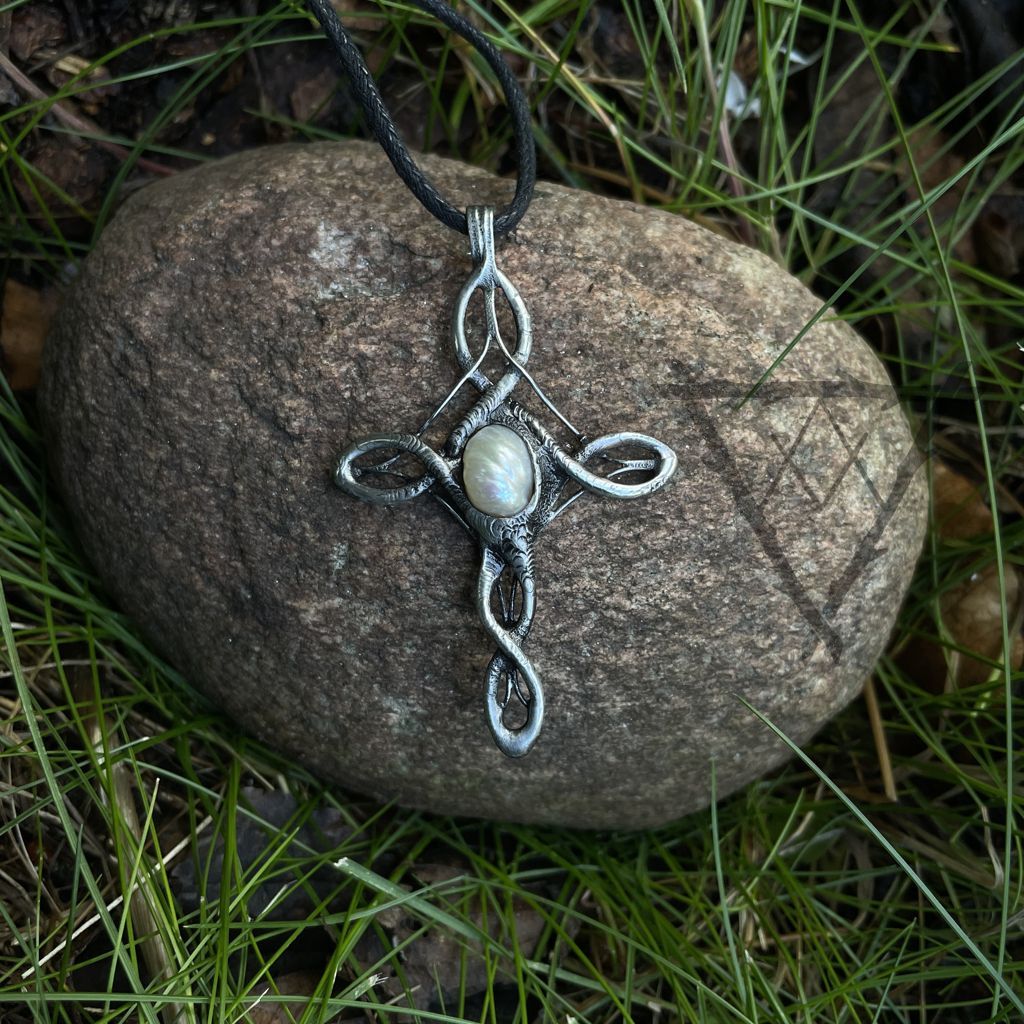
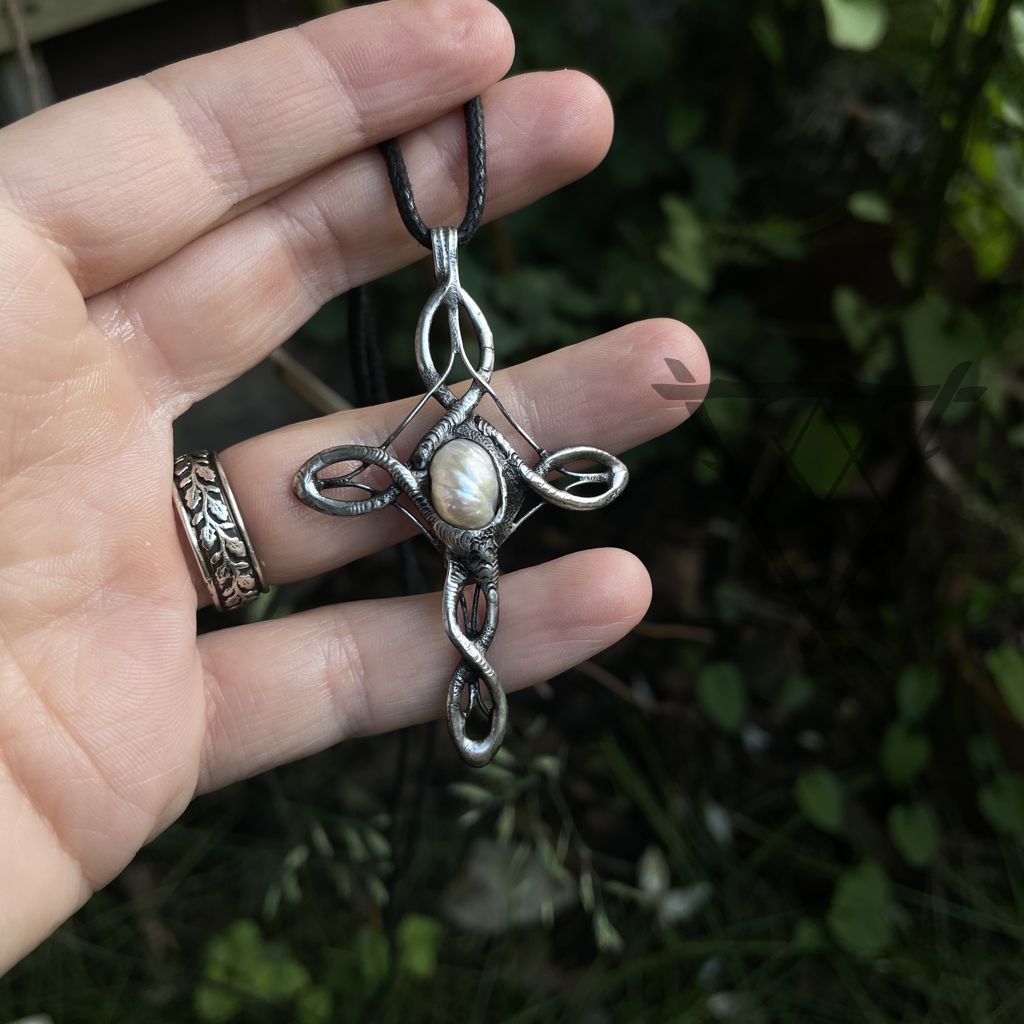
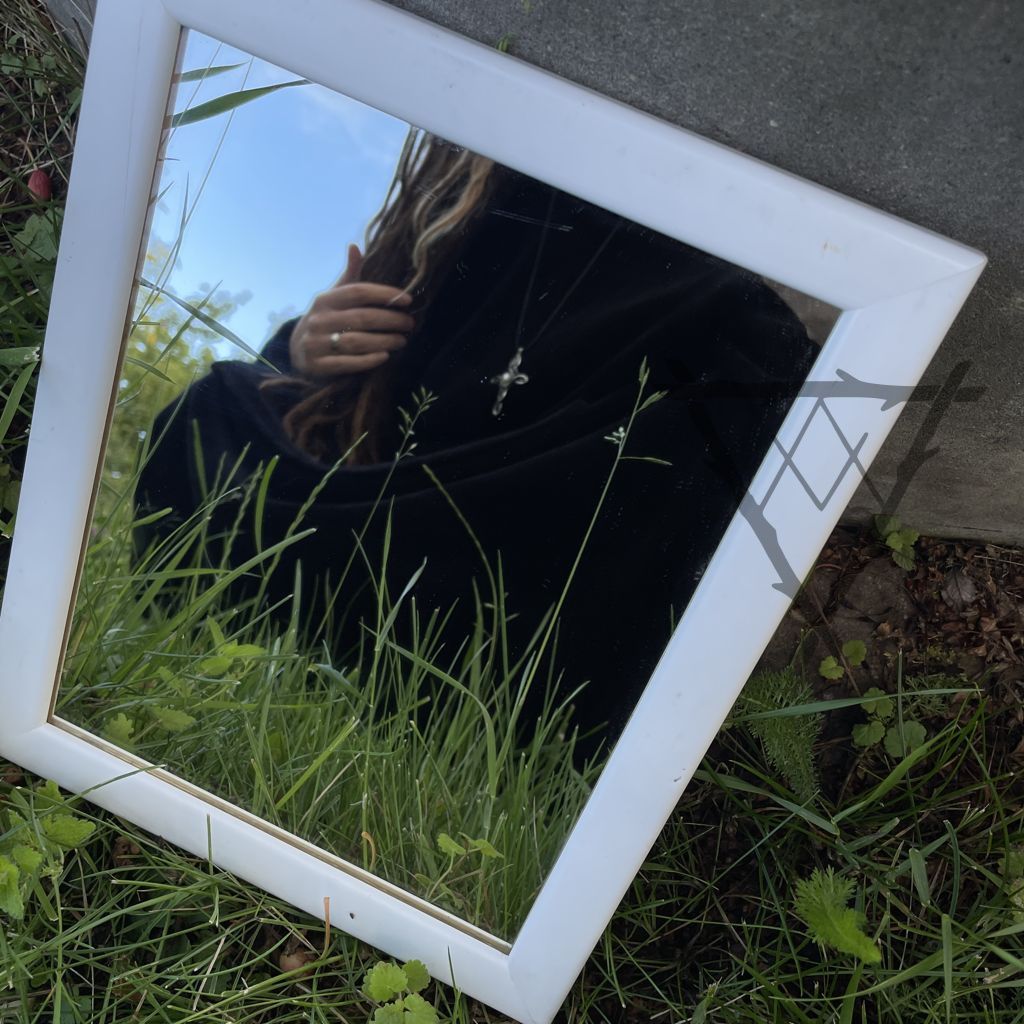
A piece of jewelry with a freshwater pearl in the shape of a decorated cross.
The pendant measures 6.5 x 4 cm
The pendant will arrive on a braided, cotton cord with a shortening knot. If you prefer a steel chain, write me this wish in a message and I will contact you by email with an offer of chains for an additional fee according to the type of chain. Fine chain 50 CZK, medium braided 100 CZK, more massive 200 CZK.
A freshwater pearl is formed naturally inside freshwater mussels as a reaction to minor irritation, which the organism transforms into layered nacre, which creates its smooth, organic shine. Geologically and biologically, a pearl is the result of a slow process of layering of aragonite and conchiolin, which gives it the character of a "living mineral". In the esoteric concept, the pearl is associated with purity, inner truth and emotions that are gradually cultivated into subtle wisdom. In addition, the river pearl carries the energy of water, i.e. flow, intuition and the ability to accept life as it is, without unnecessary resistance. The combination of the cross and the pearl creates a symbol of protection, but also of quiet self-acceptance and grounded spirituality. The piece of jewelry thus acts as a reminder that beauty often arises from the process of transformation and patient maturation.
The symbol of the cross is one of the oldest and most layered symbols of human culture. Its meaning has changed throughout history according to civilizations, religions and social functions. In pre-Christian cultures, the cross primarily represented the four cardinal points, balance and the connection of heaven and earth. In Egyptian tradition, the ankh symbol is close to it, which expressed life and its continuation. In older European cultures, it was often associated with solar cycles and natural rhythms. It was not a religious symbol in the modern sense, but an image of cosmic order. A fundamental change occurred with the advent of Christianity, when the cross became a symbol of the crucifixion of Jesus Christ. This gave it the meaning of sacrifice, redemption and hope for salvation. It gradually turned into the main sign of faith and identity and began to appear in jewelry. In the Middle Ages, it also had a protective function as an amulet and also carried a social meaning associated with status and authority. In the modern era, its meaning expanded to include cultural, family and aesthetic levels. Today, the cross carries religious, personal and decorative meaning at the same time.
The construction of the jewelry is handmade from surgical steel and the connecting material is an alloy of tin and silver. The jewelry is then treated similarly to silver - we polish it once in a while. The more the jewelry is worn, the better, it polishes itself on the clothes, the skin of the wearer, etc. The metal is stable and does not contain nickel or heavy metals. Jewelry can be worn constantly and even in water, but then it is good to dry it and treat it more often. The jewelry is hung on a braided, cotton cord and secured with an enlargement knot.